Most of us can visualize what can hopefully still be referred to as a ‘standard’ light bulb, the type which features in cartoons above the head of someone who has had an idea. Nowadays, it is getting harder to define ‘standard’ in the realm of lighting since designers have pushed the boundaries of traditional bulb shapes, while those adhering to increasing environmental concerns are attempting to move lighting designs away from the unappealing shape of existing compact fluorescent energy saving bulbs.
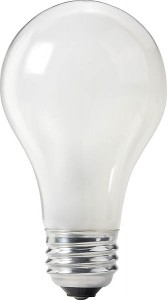
Image Source: www.lightbulbmarket.com
Light designers need to consider many factors when creating new bulbs, from the shape and material of the casing to the color and brightness of the glow from within. These decisions themselves depend upon where and how the light is being used, from the location within a room to the brightness necessary for its purpose. Most commonly in the home and office, lights are fitted upon walls, from ceilings, under cabinets or in desk lamps. The latter clearly requires a directional beam of light to provide functional illumination, while the generic room lighting can be a more spherical glow. The room itself can determine the type of light since kitchen and bathroom lighting needs to be bright to help cooking and cleaning, while bedroom and lounge lighting can get away with a warmer soft glow.
The shape of a light bulb depends upon its final purpose, be it decorative or functional. In the more ornamental range we find the eye-pleasing glass cased candle, twisted candle, angular candle, hexagonal candle, flambeau and crystalline pear shaped bulbs. Functional bulbs are usually arbitrary spherical, ellipsoidal, reflector and sealed beam types which can provide directional or dispersed light. The type of light also determines the shape, since standard incandescent bulbs are formed out of thin glass casings while the newer LED bulbs, due to their cool operating temperatures, are fitted into plastic casings. The directional nature of light emitting diodes has necessitated a new shape of bulb which can reflect light in order to create a dispersed light. Modern light designs also demand uniqueness and with LED lights it is easier than ever to create colored bulbs for the home or social venues.
The materials used in lighting designs are changing from the traditional glass casing of incandescent and fluorescent lights to the plastic casing of new LED bulbs. Glass cases are used because they are resistant to heat, which reaches over 120°C on incandescent filament lights, while plastic casings are now possible with the LED’s which remain cool. Designers will feel the increasing pressures created by environmental concerns to create recyclable and even recycled bulbs, without developing another dull energy saving variety which many people find provide insufficient lighting.
Hand blown glass artwork has enabled some fantastical designs to emerge, including the melting Dali-style bulbs of Pieke Bergmans, or the impressive dripping water effect designed by Tanya Clarke. Beautiful though these are, they are not wonderfully practical, especially in a family home where lots of glass items can be quite a hazard.
There are so many components to consider when designing light bulbs that it is a good thing that designers and physicists can put the brain power together to create safe, efficient and unique looking lights, enabling interior designers to create their desired effect without compromising safety and environmental costs.
This article was written by Emily Banham on behalf of Ecoled, a specialist UK manufacturer of energy efficient LED lighting products, power supplies and control systems. Ecoled also offer a lighting design and consultancy service for both residential and commercial projects.