Before man learned to make glass, natural forms of the beautiful, delicate material were occasionally found as a result of lightning striking sand, or volcanic eruptions fusing rock. The intrigue of these discoveries undoubtedly inspired our ancestors to recreate and master the process with tools, and so began the entry of glass art into our daily lives. At the first thought of glass art, you might only envision sculpture, vessels, and stained glass window panes. Today, however, we have the luxury of including masterful glass art as regularly used, functional installations in our homes in the form of glass sinks, glass countertops, and glass lighting, to name a few.
History of Glass Art
The first glass vessels were produced in roughly 1500 B.C. in Egypt and Mesopotamia. At that point, the craft was extremely labor intensive and time consuming, therefore only the wealthy could afford glass pieces and they were considered as valuable as gems. When the blowpipe was invented in 30 B.C., glass production soared, and eventually became readily available for everyone’s use at home. Fortunately for all of us, glass artisans around the world have mastered many distinctive techniques and brought us a wide range of collectible and functional glass art that can be beautifully exhibited in the home.
Glass Art Techniques & Application in the Home
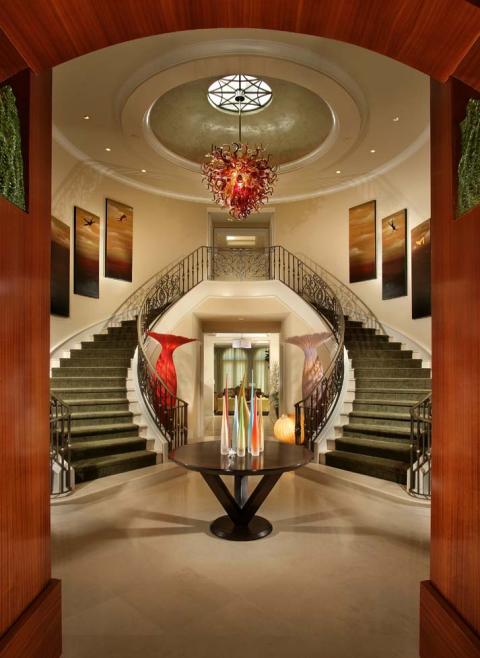
Glass is artfully manipulated in many techniques these days. Almost all handmade glass art falls into one of three main categories: hot glass, warm glass, and cold glass. Hot glass artwork typically involves working with molten glass around 2000 degrees, and includes blown glass, solid sculpted glass, and cast glass. This style can result in pieces that range from sleek and modern, to wild and whimsical. A blown glass cluster chandelier, for instance, can be customized per a homeowner’s color and size specifications, and is a dazzling focal point for a foyer or grand room.
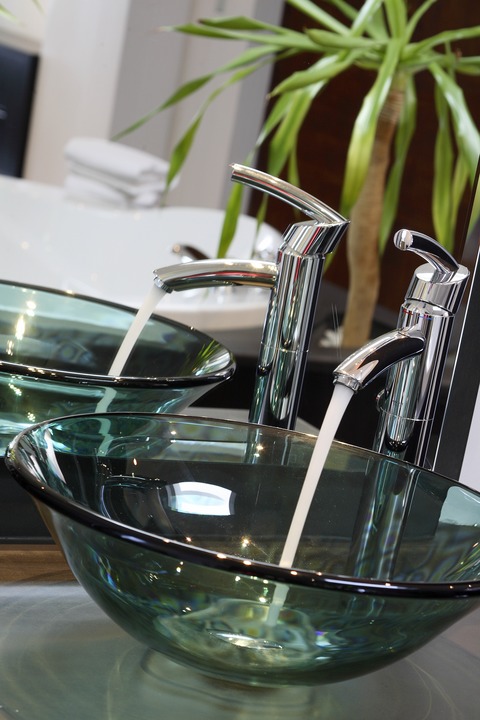
Warm glass is created by heating glass in an oven or kiln so it is just hot enough to move or bend, and includes art forms such as fused glass, kiln glass, kiln casted glass, and bent glass. There is a great deal of versatility in this glass art technique, including the ability to fuse other materials in between the layers of glass as is illustrated in this Platinum Fused Glass Bath Sink. Like fingerprints, no two artisan fused glass sinks is perfectly alike – so, make sure you’re in good hands with a designer who has a talent for coordinating a combination of unique functional glass art pieces in the same room.
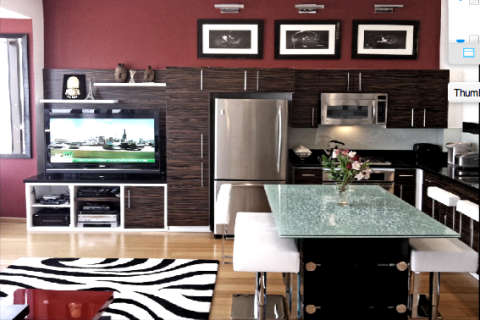
Cold glass working is a technique used on glass that is not hot, such as grinding, etching, polishing, and engraving. Consider the endless design possibilities of a glass art piece such as a custom carved and painted glass countertop that, by its own nature is not only beautiful, but also perfectly functional, non-porous, hygienic, heat, scratch, stain and mold resistant.
Some glass artists also use the method of lampworking or flameworking, during which pre-made glass tubes are heated with a torch in order to create beautiful objects such as beads, jewelry, ornaments, and small figurines. Glass objects made in this technique, such as marbles, pull knobs, and miniature trinkets are often so intricate and precise, that despite their small dimensions, have the ability to mesmerize and inspire. While remarkable enough to be locked in a display case, remember that many glass pieces are meant to be used and enjoyed on a daily basis!
 Author Bio: Jack is a content contributor to a growing family of online resources for the designer and discerning homeowner focused on handcrafted, functional works of art, including Artisan Crafted Home. Find Jack on Google+ and Twitter.