Slate is a natural stone that is both dense and durable. It can be formed into thin roofing slates thanks to two properties: cleavage and fracture. These properties give slate two lines of breakability. Cleavage allows slate to be split in one direction easily, while fracture refers to the stone’s grain.
Slate is commonly split in such a way that the length of the tile runs in the direction of the grain. The kind of texture that comes up after splitting is predetermined by the rock from which the split tile was sourced. The same can also be said about its color.
Slate Colors
Slate deposits in the United States are mostly concentrated in Vermont and New York (a.k.a. Slate Valley), although active quarries still remain in Virginia and Maine. A lot of different factors affect the formation of slate in a certain area, which is the primary reason why slate comes in such a wide range of color options.
Some quarry sites produce green, gray, black, and red slate, while others have the more traditional blue-gray and blue-black colors. In the New England region, colored slate abounds. Some of the most distinctive colors Vermont quarries have produced include semi-weathering gray/green, variegated purple, unfading mottled green and purple, strata gray, Vermont black, and unfading red.
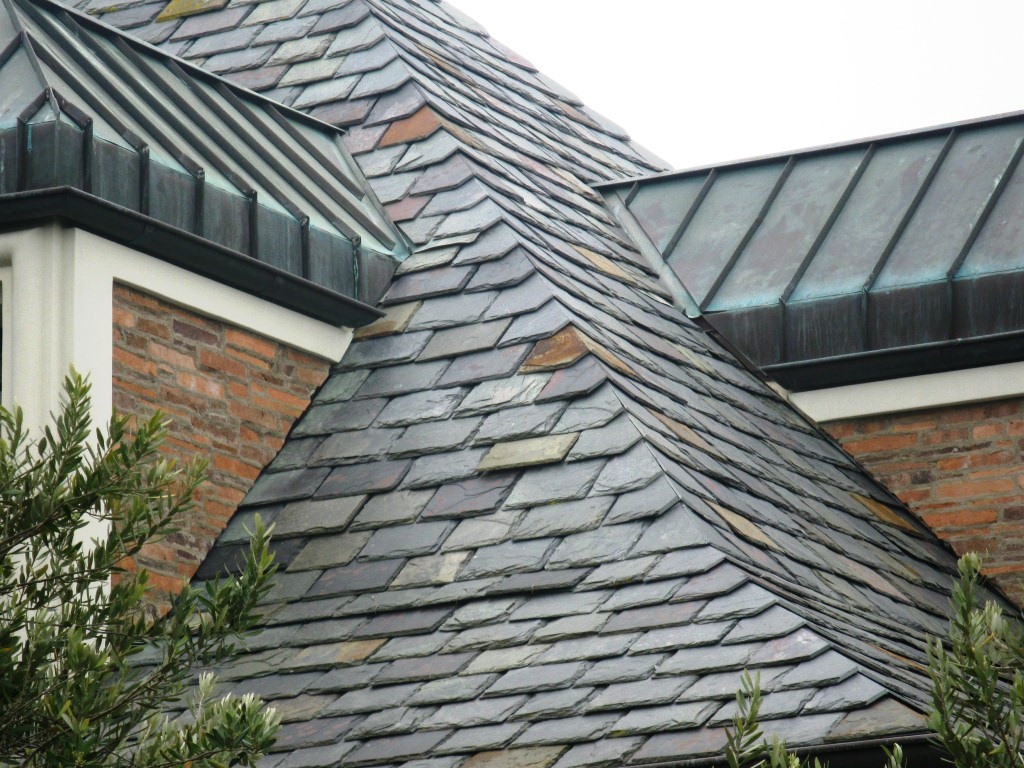
We make it a point to tell our clients that all slate left exposed to the elements will eventually change color—some more than others. If you want roofing slate that goes through very little color change, choose colors labeled unfading or permanent. If you’d like something more dynamic, weathering slate is best. If you want something in between, choose semi-weathering slate.
Benefits of Roofing Slate
Slate isn’t exactly a cheap roofing material upfront—a fact that’s an automatic no-no to some homeowners. Roofing slate costs as much as $250 to $600 per square (100 square feet) uninstalled, while labor can run as high as $450 per square.
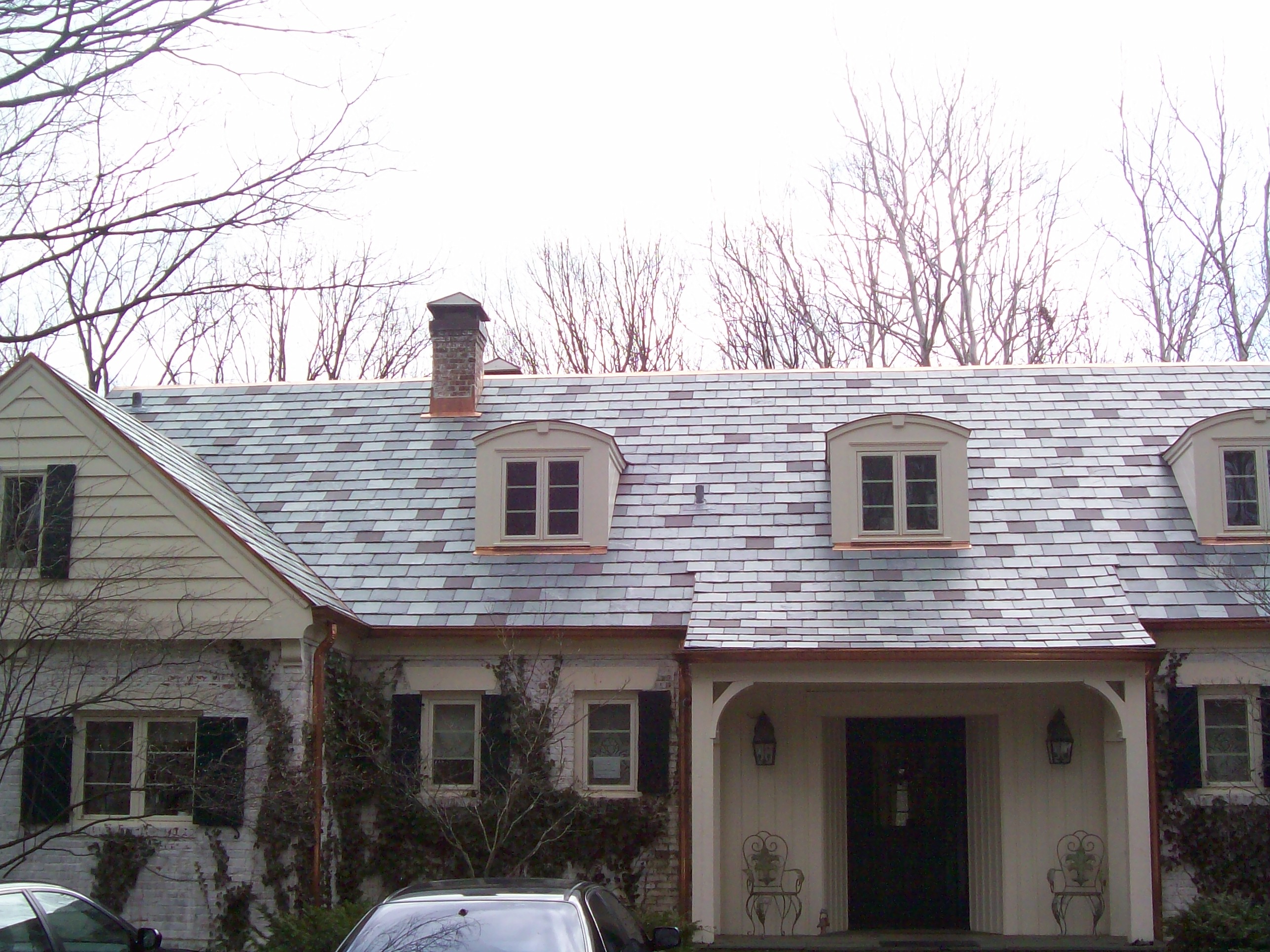
BUT because slate is strong enough to outlive even you and your home, it is, over its lifetime, one of the most cost-effective roofing options available today.
Slate is resilient enough to withstand any kind of weather and has outstanding fire resistance, so you can trust that it will do an excellent job of protecting your home. It is also an all-natural material that can help regulate temperatures inside your home—plus points for the environment and for your pocket. And, barring extreme damage, old roofing slate can be reused on another roof, for another lifetime.
All these, combined with the fact that slate roofs give homes a classic, timeless beauty, make slate a great investment.
What to Choose
The kind of slate you choose is largely a matter of personal taste. All you really need to do is make sure that the slate your contractor is using meets the standards set by ASTM International, an organization that develops and publishes technical standards for materials like roofing slate.
You’re in good shape if your slate has been rated for compliance with ASTM C406.
Installation Concerns
As is usual in natural stone and tile roofs, slate is heavy. This heft can complicate installation. You can’t just have roofing slate installed on any existing home—your contractor will have to first make sure that your house is able to support all the added weight. Any additional reinforcements will add to your material and labor costs.
Working with a trusted contractor who can offer both manufacturer and workmanship warranties is your best guarantee of proper installation. For best results, ask around for recommendations and get quotes from multiple local contractors. A slate roof is a lifetime investment, so do your research thoroughly.
Author Bio: Michael joined DaBella Exteriors in 2012, but he has already worked in the home improvement industry for eight years beforehand. His passion is designing and witnessing his work come to life, but he finds the same joy in seeing his clients happy after a successful project.